The clock that inspired this report
The Doomsday Clock began in 1947 as a magazine cover. Artist Martyl Langsdorf designed it for the Bulletin of the Atomic Scientists, which scientists associated with the Manhattan Project had founded two years earlier. She set the hand at seven minutes to midnight because that position suited the design. Midnight represented global catastrophe. The image gave readers a simple way to see how urgently the Bulletin viewed the danger of nuclear weapons.
The setting first changed in 1949, when the Soviet Union tested its first atomic bomb. The Bulletin moved the hand to three minutes to midnight. It moved in the other direction in 1991, reaching a record 17 minutes to midnight after the United States and Soviet Union signed the first Strategic Arms Reduction Treaty. Over time the Bulletin broadened its assessment to include climate change, biological threats, and emerging technologies. In January 2026 it set the clock at 85 seconds to midnight, its closest setting to date. Each setting expresses the Bulletin’s judgment about the risks and the steps governments are taking to reduce them. Doomsday Clock timeline · 2026 statement
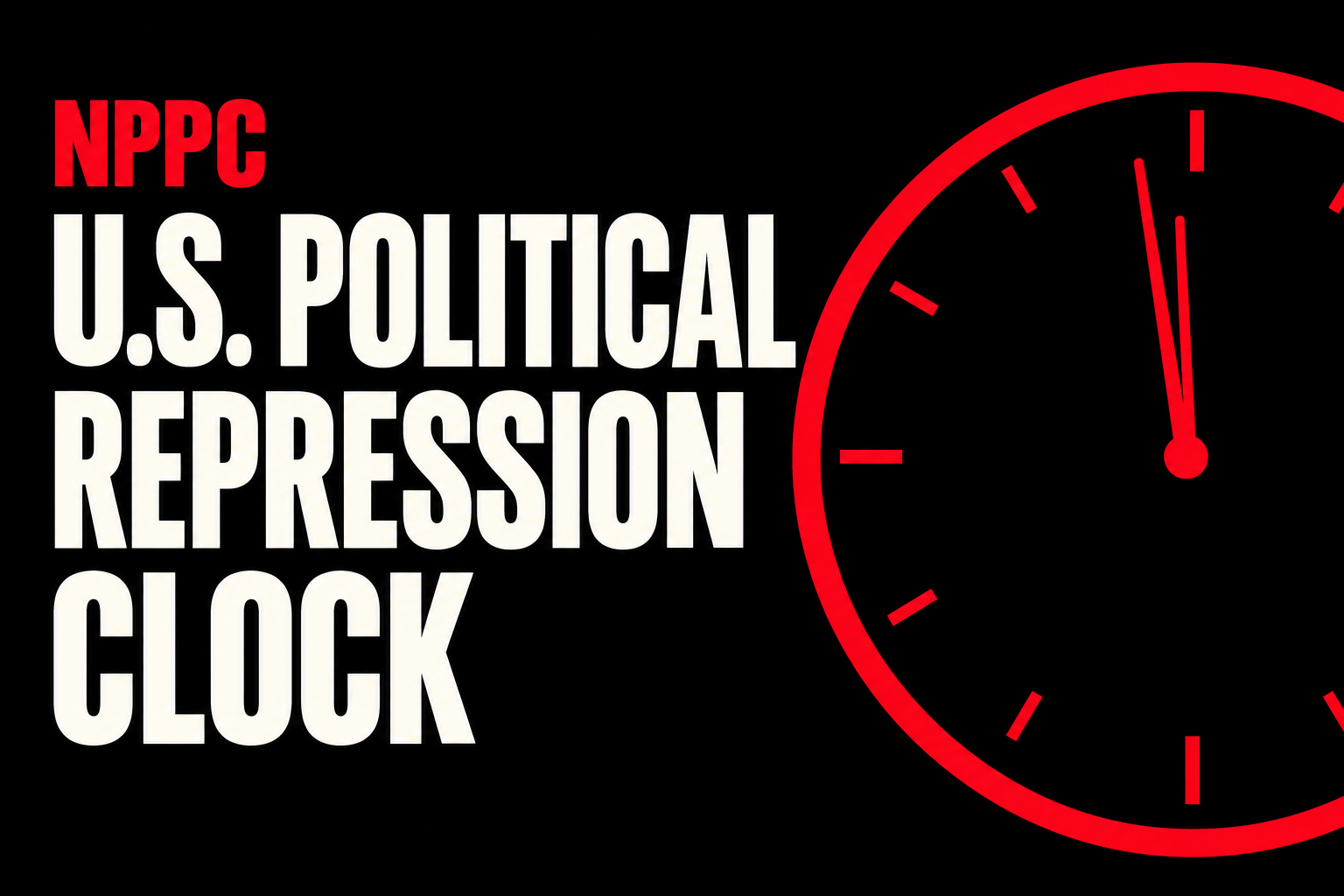
The U.S. Political Repression Clock adapts that visual idea to a different question. Its setting reflects the documented use of arrest, prosecution, and confinement against political speech and organizing in the United States, alongside the strength of the safeguards people can use to challenge those actions.
to midnight Baseline assessment · November 8, 2026
What the clock measures
The clock tracks the use of arrest, prosecution and confinement to suppress political speech, organizing and association in the United States. Midnight represents systemic repression, when authorities routinely use those powers to suppress dissent and meaningful remedies are difficult to obtain.
What moves the hand
- New cases. Documented arrests, prosecutions or detention with evidence linking the use of state power to political activity.
- Severity. Prolonged pretrial detention, disproportionate sentences or restrictive confinement.
- Reach. Similar practices spreading across jurisdictions or affecting more movements.
- Safeguards. Whether courts and oversight bodies prevent abuses, secure releases or provide remedies.
Four positions
- 15 minutes to midnight
- Documented incidents are isolated and remedies remain accessible.
- 5 minutes to midnight
- Documented cases recur or show a widening pattern.
- 2 minutes
to midnight - Repressive practices are sustained or widespread, with serious custody consequences or weak remedies.
- 30 seconds to midnight
- Authorities routinely use detention or prosecution to suppress dissent, with little practical recourse.
Timeline of Political Repression
Selected milestones in U.S. political repression, 1950–2026.
How to read the clock
Red bars mark four-year intervals. Unlabeled gray bars mark each intervening year. Each bar uses the most recent documented editorial reading available by that year. Callouts identify events in their original years. The 1950–2025 settings are retrospective editorial estimates based on the event and its context, including the reach of repression, custody consequences, and access to remedies. They describe the conditions illustrated by each milestone. The 2026 setting is the published baseline. Dates are spaced by entry. The side markers are evenly spaced, with bar lengths interpolated between the labeled times.
Historical clocks
These retrospective editorial readings assess individual episodes of repression and legal responses to them, using ten-second increments.
Alien and Sedition Acts
100 seconds to midnight
Cherokee forced removal
20 seconds to midnight
Suspension of habeas corpus
80 seconds to midnight
First Red Scare
50 seconds to midnight
Internment of Japanese Americans
30 seconds to midnight
McCarthy Hearings
120 seconds to midnight
Why the clock is at 2 minutes to midnight
Baseline assessment, November 8, 2026. The review compares 2025 with 2024 and uses documented 2026 court developments to assess safeguards. The strongest evidence concerns immigration enforcement against noncitizen speakers and police interference with protest coverage. Confidence is moderate. These sources cover selected incidents and litigation, and a complete nationwide count of political imprisonment remains unavailable.
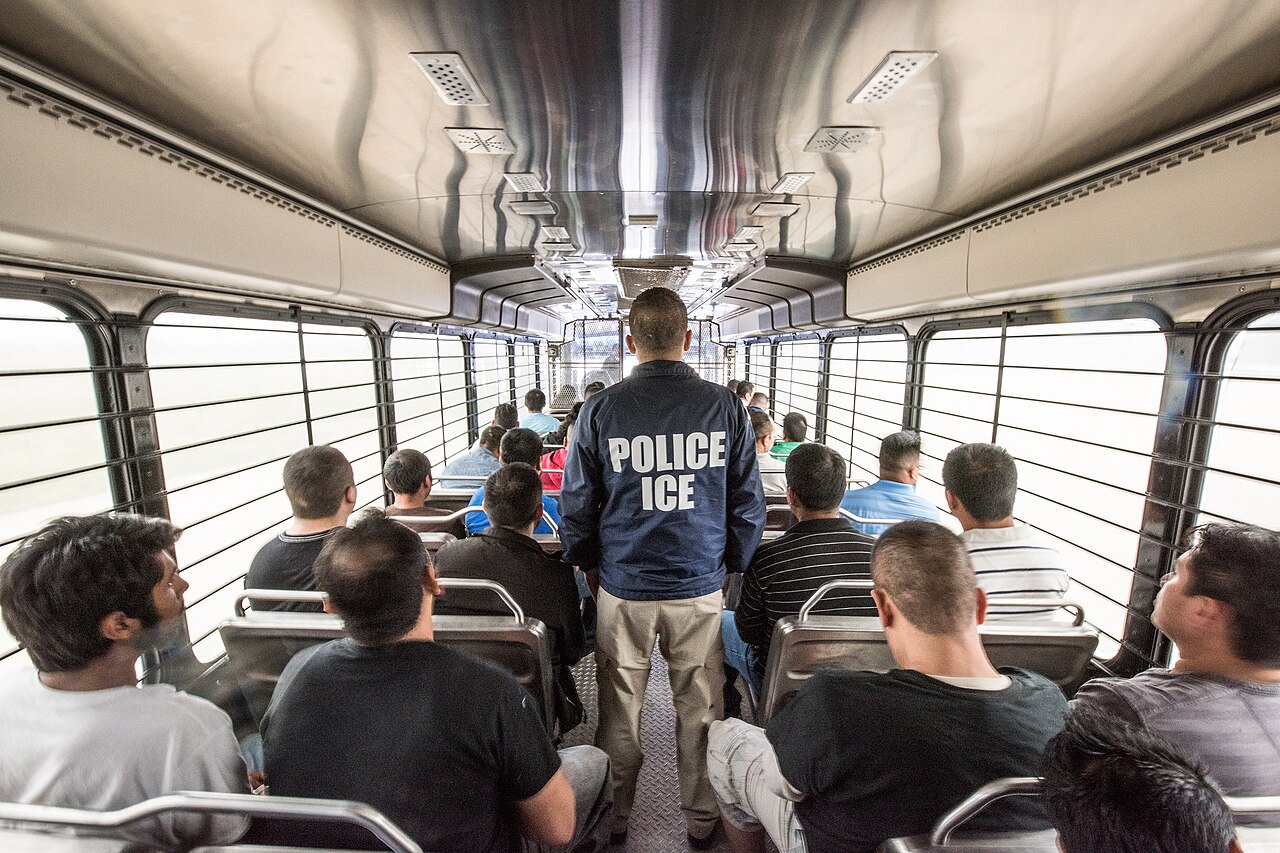
- New cases and severity. After a trial, a federal district court found that an immigration enforcement policy targeting noncitizen students and faculty for protected speech violated the First Amendment. Federal agents arrested Columbia graduate and protest negotiator Mahmoud Khalil in March 2025. He remained in immigration detention until a court ordered his release in June. This shows how immigration detention can impose substantial consequences before a court resolves a dispute. AAUP litigation record · Khalil case record
- Reach. Freedom House documented broader civil liberties setbacks in its 2026 assessment, which covers 2025. The U.S. Press Freedom Tracker recorded at least 32 journalist detentions or charges as of December 15, 2025, compared with 50 in 2024. The total fell, while nearly 90 percent of the 2025 incidents occurred during protest coverage and the protest incidents centered on immigration. These are press freedom incidents. They provide context alongside the evidence of political detention. Freedom House 2026 · Freedom House 2025 · Press Freedom Tracker
- Safeguards. In January 2026, the district court set aside the challenged policy. The government appealed and the plaintiffs cross-appealed. The court orders and Khalil's release show that judicial remedies can still have practical force, even after extended detention and while litigation continues. Orders and appeals · First Circuit docket
Historical comparison. The Senate's Church Committee documented a sustained FBI campaign to disrupt civil rights and antiwar movements. That record gives a concrete benchmark for organized domestic repression. Today, the court findings and documented detention show sustained abuse with serious consequences in specific areas. Meaningful judicial remedies still operate. Together, those findings support 2 minutes to midnight, the third of four positions. Church Committee history
The times are symbolic markers on an editorial scale. They express a judgment based on documented evidence.
Read the political prisoner guidelines, explore the NPPC database, or see the Doomsday Clock, which inspired this visual format.