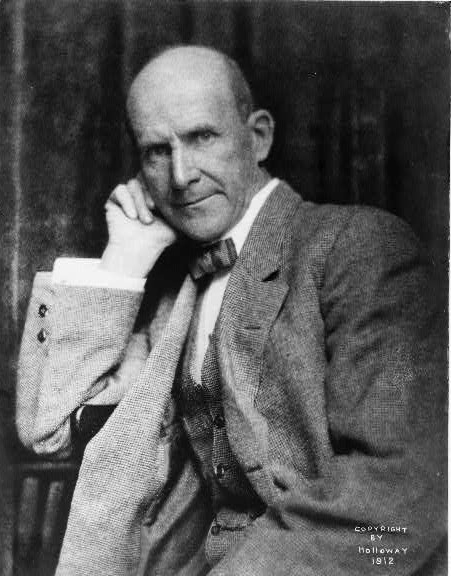
Biography
Carlo Tresca was an Italian-American anarchist, syndicalist, orator, and newspaper editor who became one of the most prominent radical labor agitators in the United States. A leader of the Industrial Workers of the World during the 1910s, he helped lead the Lawrence (1912) and Paterson (1913) textile strikes and the 1916 Mesabi Range iron miners' strike in Minnesota, where he and other organizers were jailed for months on an accessory-to-murder charge arising from the strike that ultimately collapsed without trial. As editor of the anti-fascist weekly Il Martello ('The Hammer'), he became a leading voice against Mussolini's regime in America; at the behest of the Italian government, federal authorities prosecuted him for a two-line birth-control advertisement and he served about four months in the Atlanta federal penitentiary in 1925 before public outcry forced President Calvin Coolidge to commute the sentence to four months. A fierce opponent of both fascism and Stalinism, Tresca was assassinated on a Manhattan street corner on January 11, 1943, in a killing widely attributed to the Mafia and never officially solved.
The June 8 report describes Tresca’s completed release after bail was raised to $2,500 when he waived examination the previous day. It attributes the assault and kidnapping accusations to the anti-Fascist dispute and records his claim that Giacoma Caldora had lured him into Fascist headquarters. Those are competing allegations, not findings. This is a distinct 1927 episode, without an exact personal intake or completed detention total. Source: https://www.marxists.org/history/usa/pubs/dailyworker/1927/1927-ny/v04-n124-NY-jun-08-1927-DW-LOC.pdf#page=5
1920s release-date review: Tresca's physical release was May 7, 1925, not May 5. The February 16 commutation shortened his sentence to four months and did not itself release him. Earlier Mesabi custody endpoints remain separately under review.
Source: Pitzer College Anarchy Archives, Tresca chronology, entries for February 16 and May 7-8, 1925, citing Nunzio Pernicone's biography, pages 158-159.
1920s remaining-entry review: Nunzio Pernicone, Carlo Tresca: Portrait of a Rebel, pages 156 and 159, describes handcuffed departure from Pennsylvania Station on January 5, 1925, prison entry two days later, and release May 7. January 5 denotes custody including transport; it is not Atlanta intake. The 122-day interval includes those two transport days. No earlier or later detention is included.
Nunzio Pernicone distinguishes several early newspaper-libel prosecutions. After the Naselli case and an appeal, Tresca actually served three months at Moyamensing; the December 28, 1905 judgment had imposed three months and a $100 fine, and he was back at his newspaper by March 1907. In the separate DiSabato and housekeeper libel case, the January 21, 1909 judgment imposed six months and $500, but the sentence was commuted after fifteen actual days of confinement. These were separate stays, not six completed months in the latter case. Pernicone, pp.30–39.
Pernicone dates the Marinaro libel judgment to November 5, 1910, when D. Carnahan imposed nine months. Bail pending appeal interrupted the proceedings; after a new trial on June 6, 1911 the same sentence was imposed. The biography places his actual Allegheny County Jail confinement from June 1911 to March 1912, without exact admission or release days. Pernicone, pp.45–47.
The hotel-strike arrest on January 24, 1913 ended with Judge Kernochan dismissing the disorderly-conduct charge on February 8. Pernicone separately describes the Paterson sixty-day sentence of March 12, interrupted after several actual days by certiorari and later overturned, and the later Paterson trial sequence: a hung jury on December 15, 1913 and a not-guilty verdict at retrial on June 30, 1914. Those stages do not establish continuous detention from arrest to retrial. Pernicone, pp.63,69–76.
The biography identifies an August 30, 1916 indictment as an accessory after the fact in the Mesabi strike prosecution. Its account of a July 3 late-night arrival and arrest at about 3 a.m., and a New York welcome before Christmas Eve, leaves a conflict with the legacy exact custody endpoints; those approximate references do not establish replacement admission or discharge days. Pernicone, pp.89–95.
Tresca was arrested on September 29, 1917 and held in the Tombs, then released on bail at the end of October. George W. Whiteside represented him; severance was granted February 15, 1918 and the charges were dropped in March 1919. The intervening bail period is separate from physical imprisonment. Pernicone, pp.97–98.
The federal mailing prosecution began with the August 14, 1923 arrest and release on bond the next day. Pernicone distinguishes that initial article allegation from the birth-control-advertisement count on which Tresca was convicted November 27, 1923. On December 8, 1923 one year and one day was imposed; Maxwell S. Mattuck prosecuted and Harold A. Content acted as defense counsel. The later prison transfer and completed stay are separately documented. Pernicone, pp.151–159.
For the separate Caldora affair, Pernicone reports that a grand jury found insufficient evidence and the charges were dropped in June 1927. That was a decision not to prosecute, not a trial acquittal. He also records Tresca’s February 9, 1930 arrest at a Lansford rockmen’s meeting for inciting a riot, a $10,000 bail demand and release by a local magistrate, without an exact physical-release day or completed custody duration. Pernicone, pp.184–185,211–212.